

Here's a scenario every property manager knows too well: Friday afternoon, you get a call. Contractors working on a tenant buildout just hit an electrical conduit. Power is out to three units. Tenants are losing business. The contractor swears they had no way of knowing anything was there. And you're coordinating emergency electricians at overtime rates while fielding angry calls from affected tenants.
This scenario is completely preventable, costs you nothing to prevent, and requires only a simple contract clause you can implement immediately. The solution? Mandatory ground penetrating radar scanning before any cutting, coring, or drilling in your properties.
What Property Managers Need to Know
- Zero budget impact: Pass GPR scanning costs directly to tenants through tenant improvement contracts—no property management budget required
- Prevents emergency repairs: Proactive scanning eliminates utility strikes that create expensive emergency repairs and tenant disruptions
- Reduces management workload: Fewer emergency calls, less coordination with multiple tenants, no overtime contractor scheduling
- Potential insurance benefits: Demonstrating proactive risk management may reduce liability insurance premiums
- Tenant relationship protection: Preventing disruptions to tenant operations maintains positive landlord-tenant relationships
- Simple implementation: Single contract clause requirement—no new procedures or management overhead
Why This Matters for Jacksonville Property Managers
Property management in competitive markets like downtown Jacksonville, the Medical District, and Southside commercial corridors requires balancing tenant satisfaction with operational efficiency. Tenant improvement projects create inherent risks—contractors cutting into concrete to install power, data, HVAC, or plumbing connections can easily strike embedded utilities they cannot see.
When utility strikes occur, property managers bear the consequences even though tenants hired the contractors. You coordinate emergency repairs. You manage tenant complaints about lost productivity. You potentially deal with insurance claims. And you risk damage to your property's reputation as a professional, well-managed facility.
Ground penetrating radar eliminates these problems by revealing what's embedded in concrete before cutting begins. Contractors know exactly where utilities, rebar, post-tension cables, and conduits exist. They adjust their work accordingly. And your property avoids the cascading problems utility strikes create.
The Real Cost of "Saving Money" by Skipping GPR
Some tenants or their contractors view GPR scanning as an unnecessary expense—until something goes wrong. Let's look at actual cost comparisons:
Professional GPR scanning for typical tenant improvement: $400-$800 for comprehensive verification of cutting locations throughout a buildout project. This prevents problems before they occur.
Emergency electrical repair after conduit strike: $2,000-$5,000 for after-hours electrician, plus lost business revenue for affected tenants, plus property manager time coordinating repairs and managing tenant relations. This happens because problems weren't prevented.
Post-tension cable damage: $100,000-$500,000+ for structural engineering assessment, emergency repairs, potential tenant relocations during repairs, and liability exposure. I've personally responded to post-tension cable strikes where the released force—60,000+ pounds—caused catastrophic structural damage including collapsed walls.
Property managers who require GPR scanning prevent these scenarios entirely, at zero cost to property management budgets, through simple contract requirements.
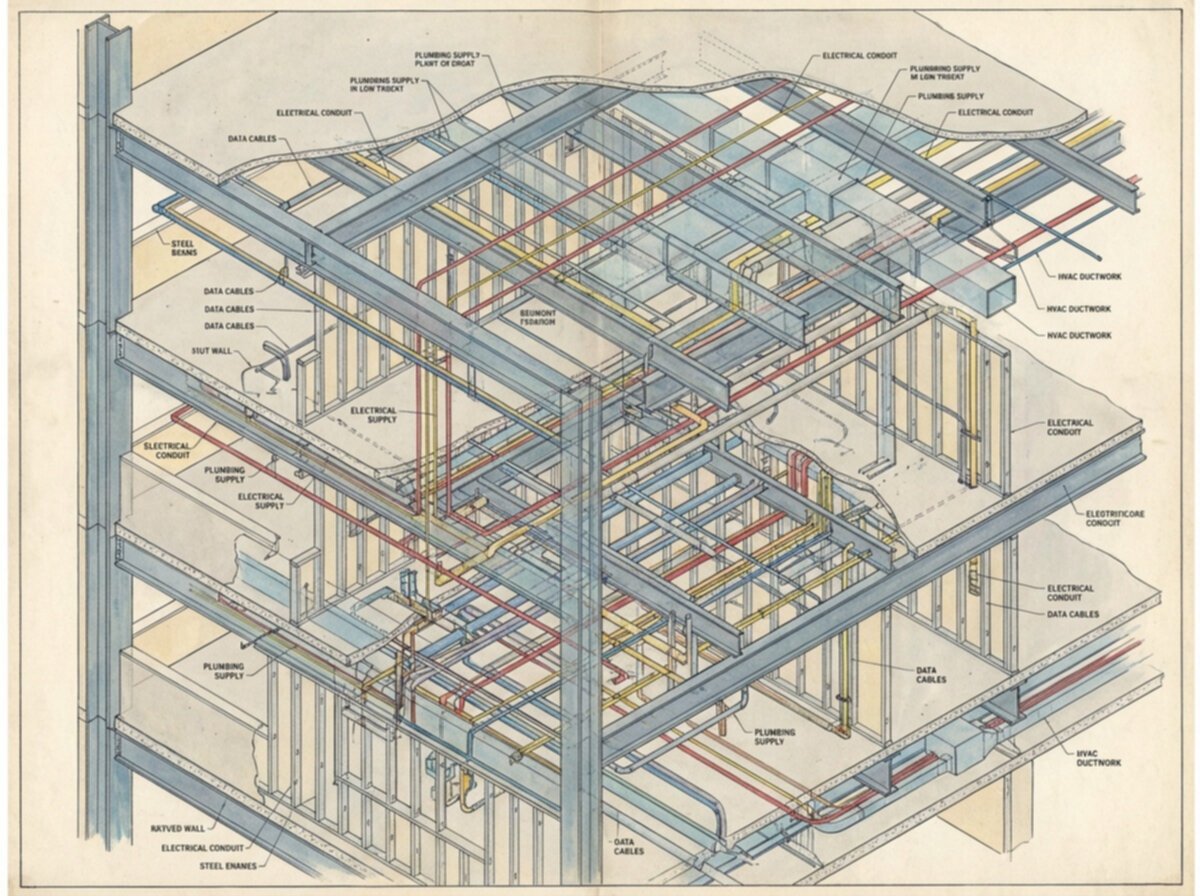
Modern commercial buildings contain complex embedded infrastructure—utilities, data lines, HVAC systems, and structural elements that create significant risk during tenant improvements
The Zero-Cost Implementation Strategy
The brilliant part of this preventive strategy: it costs property management nothing. Here's how it works:
Add One Clause to Tenant Improvement Contracts
Require that all cutting, coring, or drilling into concrete must be preceded by professional ground penetrating radar scanning. Specify that the tenant or their contractor bears the cost as part of tenant improvement expenses—exactly like they pay for the electrician, HVAC contractor, or general contractor performing the buildout work.
This single contract clause shifts a modest preventive expense (GPR scanning) to the party benefiting from the buildout (the tenant), while protecting property management from much larger reactive expenses (emergency repairs, tenant disruptions, structural damage).
Frame It as Protective, Not Restrictive
When presenting this requirement to tenants, frame it accurately: you're protecting their investment in their buildout. Hitting a utility during construction delays their project, potentially damages their newly installed improvements, and creates complications they'll regret not preventing.
Professional tenants appreciate property managers who demonstrate forward-thinking risk management. This requirement positions your property as professionally managed, safety-conscious, and protective of tenant interests—all positive attributes that enhance your property's market position.
Specify Qualified Providers
Not all concrete scanning is equally reliable. Your contract clause should specify that scanning must be performed by companies specializing in ground penetrating radar services—not general contractors offering scanning as a side service. Our article on RADAR imaging companies serving Jacksonville explains why specialization matters for reliable results.
Companies using professional GSSI equipment and employing operators who scan concrete daily provide dramatically more reliable results than occasional users with entry-level equipment. The reliability difference directly affects whether utility strikes are prevented or occur.
Real-World Scenarios This Strategy Prevents
The Friday Afternoon Power Outage
Scenario: Contractor installing new electrical outlets for tenant buildout cuts into floor slab. Saw blade severs main electrical conduit feeding power to neighboring tenant's server room. Power goes out instantly. Neighboring tenant's business operations halt. Their IT equipment potentially suffers damage from sudden power loss.
Your afternoon as property manager: Coordinate emergency electrician. Contact affected tenant to explain situation. Arrange temporary power or generator if server uptime is critical. Mediate between tenants about responsibility. File insurance claim. Handle potential liability for business interruption losses. Spend weekend monitoring repairs and tenant communications.
With mandatory GPR: Contractor scans before cutting. GPR shows conduit location. Contractor moves outlet three feet to avoid conduit. Installation proceeds without incident. You never get the call.
The Structural Damage Cascade
Scenario: Tenant improvement requires core holes through floor slab for plumbing connections. Contractor cores into post-tension cable. The cable—carrying 60,000+ pounds of tension force—releases energy when severed. Force travels through the cable, exits the slab edge, impacts a load-bearing wall. Wall shows immediate cracking and displacement.
Your week as property manager: Evacuate affected areas immediately for safety. Contact structural engineer for emergency assessment. Coordinate with general contractor for emergency shoring. Notify building department and schedule inspection. File major insurance claim. Relocate affected tenants temporarily. Manage contractor liability negotiations. Handle potential lawsuits. Oversee $100,000+ repair project lasting weeks.
With mandatory GPR: Scanning reveals post-tension cable locations. Contractor adjusts core locations to miss cables by safe margins. Project proceeds normally. Building integrity maintained. You never face the crisis.
The Data Line Disaster
Scenario: Contractor drilling anchor holes into wall for tenant's equipment mounting. Drill bit severs data cables embedded in wall, cutting network connectivity to multiple tenant suites. Tenants lose internet, phone, and cloud application access. Business operations stop.
Your afternoon: Field angry calls from multiple tenants experiencing network outages. Locate network technician to assess damage. Coordinate repair access affecting multiple tenant spaces. Manage complaints about productivity losses. Mediate disputes about responsibility and compensation.
With mandatory GPR: Scanning shows conduit routing. Contractor marks safe drilling locations. Anchors installed without hitting infrastructure. Network stays operational. Tenants never know problems were prevented.
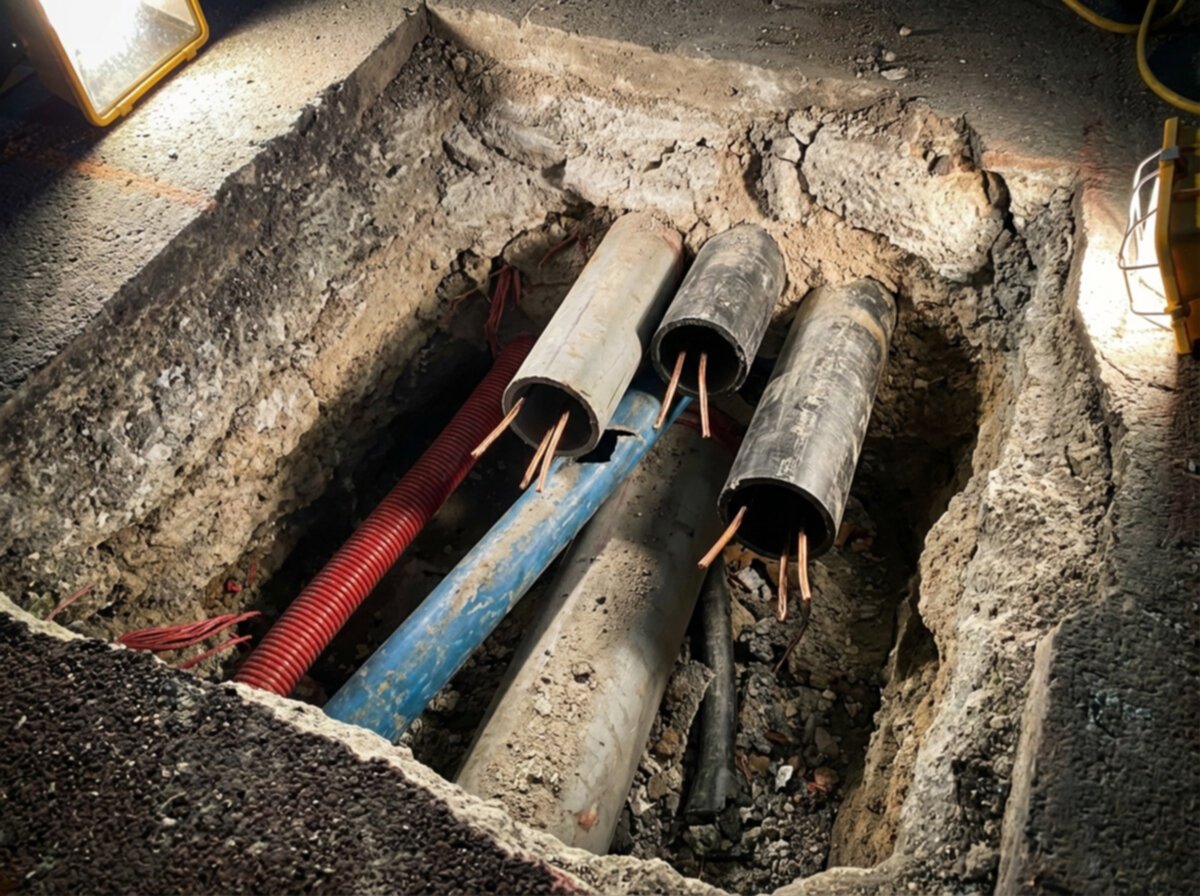
Emergency repairs cost 3-10x more than prevention, occur during tenant business hours, and create cascading problems for property management
Beyond Immediate Problem Prevention
Insurance Premium Considerations
Property insurance underwriters assess risk when setting premiums. Demonstrating proactive risk management through mandatory preventive measures like GPR scanning provides documentation of professional property management practices. While individual property situations vary, some property managers report discussing their proactive infrastructure protection policies with insurance providers during renewal negotiations.
Even if premium reductions don't materialize, preventing claims helps. Every utility strike avoided is one fewer claim on your property's loss history. Clean claims history positions your property more favorably for competitive insurance pricing.
Tenant Retention and Attraction
Professional tenants notice property management quality. Properties that prevent problems demonstrate better management than properties that react to problems after they occur. When prospective tenants evaluate commercial space, evidence of professional, forward-thinking management practices—like requiring preventive GPR scanning—creates positive impressions.
Existing tenants appreciate not experiencing disruptions from neighboring tenant buildouts. When your tenant's operations continue uninterrupted while neighboring spaces undergo improvements, they recognize the value of competent property management. That appreciation translates to renewal decisions and positive referrals.
Reduced Property Management Workload
The preventive approach reduces time spent on crisis management. Emergency coordination, tenant complaint management, contractor dispute mediation, insurance claim processing—all time-consuming activities that prevention eliminates. Property managers can focus on strategic activities rather than constantly addressing tenant improvement problems.
One contract clause added to your standard tenant improvement requirements creates ongoing benefits without creating ongoing work. Unlike active management interventions requiring continued attention, this prevention strategy operates passively once implemented.
Addressing Common Objections
"Our Contractors Know What They're Doing"
Contractors cannot see through concrete. Even experienced contractors cannot reliably predict where utilities, rebar, post-tension cables, or conduits exist based on visual inspection or construction knowledge. Building age, prior renovations, and original construction practices create variations that make embedded infrastructure location unpredictable.
Professional contractors appreciate GPR requirements because it protects them from unknowable risks. The contractors objecting to GPR are often those who've never personally experienced a major utility strike—yet. Those who have experienced costly strikes become GPR advocates immediately.
"GPR Costs Too Much for Small Projects"
GPR scanning for single-location verification costs $300-$500. Compare this to emergency electrician rates ($200-$300/hour with 3-hour minimums), structural engineering consultation ($2,000-$5,000), or lost tenant productivity (varies dramatically but easily exceeds thousands of dollars). Even for projects requiring only 2-3 core holes, prevention costs far less than potential repairs.
Additionally, as property manager, you're not paying for GPR—the tenant pays as part of their buildout costs. Your choice isn't "spend money on GPR or save money." Your choice is "require tenants to spend modest prevention amounts or potentially face much larger repair costs yourself."
"We've Done Dozens of Buildouts Without Problems"
This is survivor bias. You've been fortunate. Every property manager I've met who says "we've never had problems" eventually experiences their first major utility strike—and then immediately implements mandatory GPR requirements. Don't wait for your first $100,000+ structural repair to implement a prevention strategy costing you nothing.
The properties throughout downtown Jacksonville, Southside, and the Medical District that require GPR aren't being overly cautious—they're implementing professional risk management based on understanding construction realities.
Implementation Specifics for Jacksonville Properties
Contract Language That Works
Effective contract clauses specify requirements clearly without creating enforcement complexity. Here's language framework to discuss with your legal counsel:
"Prior to any cutting, coring, drilling, or penetration of concrete slabs, walls, or structural elements, Tenant or Tenant's contractor shall retain qualified ground penetrating radar services to locate and mark embedded utilities, reinforcement, post-tension systems, and other subsurface features. Scanning shall be performed by companies specializing in concrete scanning services using professional GPR equipment. Tenant shall provide scan reports to Property Manager upon request. Failure to perform required scanning may result in work stoppage and Tenant liability for any damage to property infrastructure."
Your legal counsel can refine this language for your specific needs, but the essential elements are: clear triggering activities (cutting/coring/drilling), qualified provider specification (companies specializing in GPR), documentation requirement (reports available to property manager), and consequences (work stoppage authority and liability clarification).
Recommended Provider Characteristics
When tenants or contractors ask for GPR provider recommendations, guide them toward companies meeting these criteria:
Specialization: Companies focusing exclusively on concrete scanning rather than offering it as one of many services. Specialist operators scan concrete daily, developing interpretation expertise that occasional users cannot match. Our guide on GPR reliability explains why operator experience dramatically affects result quality.
Professional equipment: Companies using GSSI or equivalent professional-grade systems rather than entry-level equipment. Equipment quality directly affects detection capability, penetration depth, and resolution—all factors determining whether scanning reliably identifies embedded infrastructure.
Local presence: Jacksonville-based providers can respond same-day for urgent projects and accommodate schedule changes more easily than companies traveling from Tampa, Orlando, or Atlanta. Local providers also eliminate travel fees that distant companies charge.
Documentation: Providers who mark floor locations clearly and provide photographic documentation of marked areas. Professional floor marking shows contractors exactly where to avoid, and photos document what scanning revealed for property management records.
Jacksonville-Specific Considerations
Properties in different Jacksonville submarkets face different typical buildout patterns, and understanding these variations helps property managers communicate GPR requirements effectively and anticipate common tenant improvement scenarios.
Downtown Jacksonville Commercial Properties
Downtown commercial properties typically involve office tenant improvements with significant electrical and data infrastructure additions. Modern office tenants require extensive power outlets, dedicated server room electrical, data cabling throughout the space, and often specialized equipment mounting for video conferencing systems or security infrastructure.
Downtown buildings constructed from the 1960s through 1990s commonly used post-tension concrete floor systems to achieve longer spans between columns. These buildings also feature dense rebar patterns in structural walls and often contain abandoned utilities from previous tenant improvements dating back decades. The layered infrastructure from multiple generations of improvements creates particularly complex scanning conditions.
Property managers should emphasize GPR requirements strongly for downtown office buildouts. The combination of post-tension construction (where cable strikes create catastrophic structural risks), dense existing infrastructure, and extensive new electrical work creates high-probability scenarios for utility strikes without proper scanning.
Additionally, downtown tenants often occupy business-critical operations—law firms, financial services, medical offices, technology companies—where power disruptions create substantial business losses. These professional tenants appreciate property managers who prevent disruptions through mandatory preventive measures.
Medical District Specialized Facilities
Medical District properties face the most demanding tenant improvement requirements of any Jacksonville submarket. Medical tenants install specialized equipment requiring precise anchor placements that cannot be adjusted to avoid discovered obstacles. Imaging equipment, surgical robots, and patient care systems have fixed mounting specifications.
Medical facilities also maintain critical operations where any disruption affects patient care. A power outage to a diagnostic imaging suite doesn't just inconvenience a business—it potentially delays medical diagnoses or treatment. Property managers of medical facilities cannot accept the risk of preventable utility strikes.
Medical tenant improvements also frequently involve specialized systems beyond standard commercial buildouts—medical gas systems, equipment grounding requirements, electrical isolation systems, and infection control barriers. These specialized installations require contractors who may be less familiar with concrete scanning protocols than general commercial contractors.
For Medical District properties, GPR requirements aren't just risk management—they're essential practice standards. Property managers should present scanning requirements as non-negotiable safety protocols equivalent to other medical facility requirements.
Southside Commercial and Industrial Facilities
Southside commercial and industrial properties encompass diverse building types from office warehouses to manufacturing facilities to commercial retail spaces. Industrial tenants often install heavy equipment requiring substantial anchor systems, overhead crane supports, or floor-mounted machinery.
These heavier installations create different scanning priorities. Rather than verifying numerous small drill holes like office buildouts, industrial improvements often require verification of fewer but much larger penetrations—core holes for substantial equipment anchoring, wall penetrations for overhead door installations, or floor trenching for utilities.
The consequences of strikes during industrial work can be more severe due to larger cutting equipment and higher power requirements. A contractor cutting a 6-inch core hole has more opportunity to encounter multiple utilities than someone drilling a 3/8-inch anchor hole. Industrial electrical systems also typically run higher voltages than office buildings, increasing injury risk from accidental contact.
Property managers of Southside industrial facilities should emphasize that GPR becomes more important, not less important, for heavier industrial work. The larger penetrations and higher power systems create amplified risks that scanning prevents.
Jacksonville Beach Commercial Properties
Properties in Jacksonville Beach and coastal areas face unique environmental factors affecting both tenant improvements and GPR requirements. Coastal concrete often contains higher moisture content from salt air and elevated water tables, and this moisture affects both cutting operations and GPR signal characteristics.
Beachside commercial properties also frequently undergo renovations rather than new construction. Older beach buildings may contain infrastructure installations that predate modern documentation standards, abandoned utilities from previous tenants, and construction methods that varied by individual contractor preferences rather than standardized practice.
Property managers should communicate to beachside tenants that the environmental conditions and renovation nature of coastal properties make GPR even more valuable. The combination of moisture, older construction, and layered improvements creates conditions where visual inspection or construction knowledge cannot reliably predict subsurface conditions.
Beachside properties also serve hospitality, retail, and restaurant tenants who face seasonal business patterns. These tenants particularly value avoiding construction delays and disruptions during peak seasons. GPR requirements that prevent problems during buildouts protect these tenants' seasonal revenue opportunities.
How Proactive Property Managers Use GPR Strategically
Pre-Leasing Infrastructure Assessments
Forward-thinking property managers use GPR proactively before tenant improvements even begin. When marketing vacant space to prospective tenants, having existing GPR surveys available shows what infrastructure exists and helps tenants plan their improvements more accurately.
This approach prevents surprises during buildout, enables more accurate contractor bidding, and demonstrates professional property management. Prospective tenants appreciate having infrastructure information available rather than discovering unknowns during construction. Organizations like the Building Owners and Managers Association (BOMA) recognize proactive infrastructure documentation as a property management best practice.
Pre-leasing scans also help property managers market spaces more effectively. When a prospective tenant asks "can we install equipment in this location?" you can provide definitive answers based on actual subsurface knowledge rather than speculation. This responsiveness and information availability creates positive impressions during lease negotiations.
For multi-tenant properties, maintaining comprehensive infrastructure mapping enables better planning across the entire building. You can identify utility corridors, understand load distribution on electrical systems, and recognize areas where infrastructure density might limit future improvement options. This institutional knowledge becomes increasingly valuable as properties age and undergo multiple tenant generations.
Common Area Maintenance Planning
Beyond tenant improvements, property managers use GPR for common area maintenance planning. Before repairing parking structures, replacing flooring in common spaces, or modifying building systems, GPR reveals what exists beneath surfaces scheduled for work.
Parking structure maintenance provides particularly valuable GPR applications. These structures deteriorate from traffic loads, weather exposure, and salt intrusion in coastal areas. Property managers planning concrete repairs, waterproofing applications, or structural reinforcement need to know where post-tension cables, rebar, and drainage systems exist before beginning work.
Organizations like the International Concrete Repair Institute (ICRI) recognize GPR as an essential assessment tool for parking structure evaluation. Their technical guidelines emphasize subsurface investigation before repair work to prevent damage to embedded systems and ensure repairs address actual conditions rather than assumptions.
Common area renovations also benefit from GPR assessment. Replacing lobby flooring, modifying building entrances, or upgrading common spaces often requires cutting into concrete for new installations. GPR prevents damage to utilities serving multiple tenants—damage that creates building-wide disruptions rather than single-tenant impacts.
Property managers who use GPR proactively for their own maintenance work demonstrate the same professional approach they require from tenants. This consistency reinforces that GPR isn't an arbitrary restriction on tenant work—it's a fundamental practice for any concrete penetration in professionally managed properties.
Documentation for Future Reference
Smart property managers maintain GPR scan records as part of property documentation. When future tenants or contractors ask about infrastructure locations, you can reference previous scans rather than saying "we don't know what's in the concrete." This institutional knowledge enhances property value and facilitates future work.
Digital scan records become particularly valuable during property sales or refinancing. Prospective buyers or lenders evaluating property condition appreciate documentation demonstrating proactive infrastructure management. Properties with comprehensive maintenance records—including GPR assessments showing understanding of embedded systems—typically command better valuations than properties lacking such documentation.
GPR documentation also provides liability protection. If contractors claim they weren't aware of infrastructure that scanning would have revealed, your documentation of GPR requirements and scan results demonstrates you implemented reasonable preventive measures. This documentation becomes critical evidence if disputes arise about responsibility for damage during tenant improvements.
Building comprehensive property knowledge through accumulated GPR scans over time creates strategic advantages. You understand infrastructure patterns specific to your building, recognize areas requiring special attention during improvements, and can anticipate potential challenges before tenants encounter them. This expertise distinguishes professional property management from reactive operations.
Integration With Property Management Software
Modern property management increasingly uses specialized software for maintenance tracking, tenant communications, and work order management. Forward-thinking property managers can reference GPR scan photos and floor markings in their digital systems when tenants submit improvement proposals, streamlining approval processes and ensuring requirements are consistently applied.
Preventive Maintenance Scheduling
Property managers who embrace proactive GPR use often develop preventive assessment schedules. Rather than only scanning when specific tenant improvements trigger requirements, they periodically assess critical building systems to identify developing problems before failures occur.
Parking structure assessment provides the clearest example. Rather than waiting for visible concrete deterioration, property managers schedule periodic GPR scans to identify subsurface delamination, moisture intrusion, or structural concerns while they're still manageable. This approach prevents emergency repairs, enables planned maintenance during favorable weather, and typically costs far less than reactive repairs after failures.
Building mechanical areas benefit from similar proactive approaches. Floor areas around major equipment, walls supporting heavy systems, or spaces subject to vibration from mechanical operations can be assessed periodically to identify developing structural concerns before they become critical.
Organizations like the International Facility Management Association (IFMA) recognize preventive assessment as a facilities management best practice. Properties implementing systematic preventive programs—including GPR assessment schedules—typically experience fewer emergency repairs, lower total maintenance costs, and better tenant satisfaction than properties using purely reactive maintenance approaches.
Industry Scenarios: Why Property Managers Implement GPR Requirements
The concrete scanning industry sees recurring patterns across properties nationwide. While my primary experience comes from the Atlanta market over 23 years, these scenarios represent common situations that drive property managers to implement GPR requirements. Understanding these patterns helps Jacksonville property managers recognize risks before experiencing them personally.
Multi-Tenant Power Outage Scenario
This scenario plays out regularly in commercial properties: A tenant improvement contractor installs additional electrical outlets without prior GPR scanning. During installation, cutting equipment severs a main electrical conduit feeding multiple tenant suites. Power goes out instantly to neighboring spaces.
The cascading problems are predictable. Business tenants lose productivity immediately when computers and phones die. Some lose unsaved data. Others miss time-sensitive deadlines. All submit complaints to property management about the disruption.
Property managers spend the remainder of that day coordinating emergency electrician response and managing tenant fallout. Emergency electrical repairs for conduit strikes typically run $2,000-$5,000. But the real cost comes from tenant relationship damage and management time consumed by a preventable crisis.
Property managers who experience this scenario once typically implement mandatory GPR requirements immediately afterward. Those who implement the requirement proactively never experience the scenario at all. The prevention approach costs property management nothing—scanning expenses pass to tenants performing improvements.
Post-Tension Cable Strike Risk
Post-tension cable strikes represent the most catastrophic risk from unverified concrete cutting. These cables carry 60,000+ pounds of tensioned force. When severed, that force releases violently with potentially devastating structural consequences.
The industry has documented cases where released cable force exited slab edges and impacted structural walls, causing immediate cracking, displacement, and requiring emergency evacuation. Structural repairs for post-tension damage can exceed $100,000-$500,000 depending on the extent of structural compromise and required reinforcement.
Buildings constructed from the 1970s through 1990s commonly used post-tension concrete systems, particularly in commercial office construction. These buildings exist throughout Jacksonville's downtown, Medical District, and Southside submarkets. Property managers of these buildings face elevated structural risk from tenant improvements that don't include GPR verification.
GPR reliably detects post-tension cables and shows their depth and spacing patterns. Contractors can adjust core or cut locations by small distances to miss cables entirely. The modest cost of preventive scanning—typically $400-$800 for tenant improvement verification—prevents six-figure structural repair scenarios and the operational nightmares they create.
Property managers who understand post-tension construction risks implement GPR requirements as non-negotiable safety protocols rather than optional practices. The potential consequences justify absolute requirement enforcement.
Restaurant Buildout Success Pattern
Restaurant tenant improvements provide excellent examples of GPR's preventive value. Commercial kitchen installations require extensive concrete penetrations for equipment anchoring, grease trap connections, utility routing, and fixture mounting. Without GPR, contractors frequently encounter unexpected subsurface infrastructure.
Properties that require GPR for restaurant buildouts typically see scanning reveal conditions contractors hadn't anticipated—abandoned grease trap lines from previous restaurant tenants, electrical conduits serving neighboring spaces, post-tension cables at unexpected depths, and utility routing that doesn't match assumptions based on visible fixtures.
When scanning identifies these obstacles before cutting begins, contractors make small adjustments to proposed work locations. Kitchen layouts remain functional with equipment shifted 6-12 inches to miss identified infrastructure. The buildout proceeds without utility strikes, maintains schedule, and completes without emergency repair delays.
Restaurants operating on planned opening schedules generate revenue immediately rather than experiencing delays from preventable construction complications. The tenant's investment in their buildout is protected. Property managers avoid disruption-related complaints. And the modest scanning cost—typically $600-$1,000 for comprehensive restaurant improvements—prevents $5,000-$15,000+ in potential emergency repairs.
Professional restaurant operators increasingly expect GPR requirements as standard practice in well-managed properties. The requirement signals professional property management rather than creating friction during lease negotiations.
Portfolio-Wide Implementation Benefits
Property management companies overseeing multiple commercial buildings gain substantial benefits from implementing GPR requirements across entire portfolios. When GPR becomes standard practice across all properties and all tenant improvements, the cumulative impact becomes significant.
Consider a hypothetical property management company with a downtown office portfolio processing 40-50 tenant improvements annually. Implementing mandatory GPR requirements eliminates utility strike incidents that would statistically occur in a certain percentage of unverified improvements. Industry data suggests 3-5% of significant tenant improvements encounter utility strikes when no GPR verification occurs.
By preventing even 2-3 utility strikes annually across a portfolio, property management companies avoid emergency repair costs, tenant disruption complaints, insurance claims, and management time consumed by preventable crises. The cumulative time savings alone—40-60 hours annually at property management billing rates—represents $8,000-$12,000 in avoided opportunity costs.
Add actual emergency repair cost avoidance, tenant satisfaction improvements, and reduced insurance exposure, and the ROI of a zero-cost requirement becomes substantial. All scanning costs pass to tenants performing improvements, while all benefits accrue to property management operations.
Property management companies can document their proactive GPR programs for insurance renewal presentations. Clean claims history demonstrating effective risk management creates favorable foundations for insurance negotiations, even if direct premium reductions are difficult to attribute to specific policies.
Comparing Prevention to Emergency Response
Let's examine time and cost differences between preventive scanning and emergency response:
Preventive Approach: GPR Before Cutting
Timeline: Contractor schedules GPR scan (1-2 days notice for non-urgent). Scanning occurs (1-2 hours for typical tenant improvement). Contractor receives marked locations (same day). Work proceeds as planned (no delays).
Cost to property manager: $0 (tenant pays scanning as part of buildout)
Management time required: Minimal (reviewing scan reports if desired, no active coordination needed)
Outcome: Work proceeds without infrastructure damage. Tenants unaffected. Property management continues normal operations.
Emergency Response: Utility Strike Occurs
Timeline: Strike occurs during contractor work (tenant operations disrupted immediately). Property manager notified (pulls focus from other activities). Emergency contractor contacted (may require 3-4 calls to find available provider). Emergency repairs scheduled (same day if fortunate, next business day otherwise). Repairs completed (4-8 hours minimum, potentially multi-day for complex damage). Affected tenants resume operations (after repairs complete).
Cost to property manager: $2,000-$5,000+ for emergency electrical repairs, potentially $100,000+ for structural damage, plus insurance deductibles, potential liability exposure, and premium increases from claims.
Management time required: Substantial (immediate response to strike, emergency contractor coordination, tenant communication and complaint management, insurance claim processing, contractor liability negotiations, ongoing monitoring until repairs complete).
Outcome: Tenant operations disrupted for hours or days. Neighboring tenants potentially affected. Emergency overtime costs. Property manager reputation impacted. Insurance claims filed. Contractor disputes likely. Significant management time consumed.
The choice isn't difficult. Prevention is cheaper, faster, simpler, and less disruptive than emergency response—and costs property management nothing to implement.
Implement Professional Property Management Practices
Protect your properties, prevent tenant disruptions, and eliminate emergency repairs through proactive GPR requirements. Same-day service throughout Jacksonville with professional GSSI equipment and 23+ years experience.
Call (904) 835-2193Making the Change: Implementation Steps
Step 1: Update Tenant Improvement Documentation
Work with your legal counsel to add GPR requirements to your standard tenant improvement contracts, work letters, and buildout requirement documents. Ensure language is clear, enforceable, and specifies qualified provider characteristics.
Step 2: Communicate with Current Tenants
For existing tenants planning improvements, communicate the new requirement clearly and early in their planning process. Frame it as protective of their investment and preventive of disruptions. Most professional tenants understand and appreciate proactive risk management.
Step 3: Educate Your Leasing Team
Ensure your leasing agents understand the GPR requirement and can explain it positively to prospective tenants. This isn't a restrictive requirement—it's a professional property management practice that protects tenant interests and property value.
Step 4: Identify Recommended Providers
Research qualified GPR providers serving your Jacksonville properties. Have recommendations ready when tenants ask. Emphasizing local providers eliminates travel fees and enables faster response for your tenants' benefit.
Step 5: Document and Track
Maintain records of GPR scans performed for tenant improvements. This documentation provides liability protection, creates institutional knowledge about property infrastructure, and demonstrates your proactive management practices to insurance carriers and prospective buyers if you sell properties.
Effective Tenant Communication About GPR Requirements
How you communicate GPR requirements significantly affects tenant reception. Property managers who position scanning as protective rather than restrictive encounter minimal resistance and often receive appreciation for professional management practices.
During Lease Negotiations
Introduce GPR requirements during initial lease discussions rather than surprising tenants after lease execution. Include it in your preliminary tenant improvement overview alongside other standard requirements like permitting, certificate of insurance, and final inspection approvals.
Frame it positively: "Our properties require GPR scanning before cutting or coring to protect your buildout investment and prevent disruptions to your business operations. This requirement has prevented multiple utility strikes and saved our tenants thousands in avoided delays and complications."
Most professional tenants understand and appreciate this requirement immediately. Those who question it typically accept the explanation once you describe scenarios it prevents. Tenants investing $100,000-$500,000 in buildouts recognize that $500-$800 in preventive scanning protects their much larger investment.
Addressing Contractor Objections
Tenant contractors occasionally object to GPR requirements, particularly contractors unfamiliar with professional property management practices. These objections typically fall into predictable categories, each with straightforward responses:
Objection: "I've been doing this for 20 years and never needed scanning."
Response: "Professional property management requires preventive measures regardless of individual contractor experience. Our requirement applies uniformly to all contractors to maintain consistent risk management. The scanning protects both the property and your work from unknown subsurface conditions."
Objection: "This adds unnecessary cost to the project."
Response: "Scanning typically costs $400-$800 for comprehensive tenant improvements. Emergency repairs from utility strikes cost $2,000-$100,000+ depending on what's damaged. The modest preventive expense is standard practice in professionally managed properties and protects all parties."
Objection: "We can tell where utilities are by looking at the space."
Response: "Visual inspection cannot reliably predict subsurface infrastructure. Embedded utilities, post-tension cables, and prior tenant modifications aren't visible from surface examination. GPR verification is required for all concrete penetrations—no exceptions."
Objection: "Other properties don't require this."
Response: "Professional property management practices vary. Our properties maintain high standards for tenant protection and infrastructure preservation. This requirement is non-negotiable and applies to all improvement work."
Hold firm on requirements despite contractor pressure. Contractors pushing back hardest often have the least experience with GPR and the most to learn about professional construction practices. Their resistance shouldn't override your property management judgment.
Creating Positive Tenant Experiences
Transform GPR requirements from potential friction points into opportunities demonstrating professional management:
Provide recommended providers: Rather than just requiring scanning, offer your tenant a short list of qualified providers. This helpful approach shows you're facilitating compliance rather than creating obstacles. Recommend local specialists who you know deliver professional service.
Explain the why: Share real examples of problems prevented in your properties or others you manage. Tenants appreciate understanding the reasoning behind requirements. "Last year, GPR scanning in another unit identified a main electrical conduit that would have been hit during their planned outlet installation. The scan saved them a multi-day power outage and $3,000 in emergency repairs."
Follow up post-scanning: After tenants complete required scanning, check in to ask if it revealed anything useful for their project planning. Often scans identify infrastructure the contractor hadn't anticipated, validating the requirement's value. Tenant feedback like "The scan showed cables exactly where we planned to drill—we adjusted our layout and avoided major problems" reinforces that you implemented a genuinely protective measure.
Document prevented problems: When scanning identifies infrastructure that would have been struck without verification, photograph the marked floor showing what was avoided. Over time, you accumulate evidence demonstrating your GPR requirement's value through images showing actual subsurface conditions contractors would have encountered.
Marketing GPR Requirements as Property Advantages
Forward-thinking property managers actually market GPR requirements as property advantages during leasing presentations. Rather than apologizing for "requirements" or "restrictions," present them as evidence of superior property management:
"Our properties maintain professional management standards including mandatory GPR scanning before tenant improvements. This protects your buildout investment, prevents disruptions to your operations, and ensures your project proceeds without unexpected complications from unknown infrastructure. We've had zero utility strikes during tenant improvements in three years across our portfolio."
This framing positions your property favorably compared to competitors. Professional tenants—particularly those who've experienced construction problems at prior locations—recognize and value proactive management. The GPR requirement becomes a differentiator rather than an obstacle.
Handling Special Situations
Small improvements: Some property managers question whether GPR is necessary for minor improvements like installing a single shelf bracket or small decoration. Use judgment, but err toward requiring scanning. Even small drill holes can hit conduits or cables. The cost difference between scanning one location versus ten locations is often minimal, making the requirement practical even for minor work.
Tenant-hired specialized contractors: When tenants hire specialized contractors—IT infrastructure installers, security system providers, medical equipment technicians—these contractors may be unfamiliar with GPR requirements. Ensure your contract language clearly states the requirement applies to all contractors, subcontractors, and specialty providers performing work involving concrete penetration.
Emergency repairs: Legitimate emergencies—burst pipes requiring immediate access, electrical failures needing urgent repairs, safety hazards demanding instant response—may require concrete penetration before GPR scanning is practical. Develop protocols for these rare situations, typically requiring property manager approval, photographic documentation of emergency conditions, and mandatory scanning before any non-emergency related work proceeds.
Sequential improvements: When tenants plan buildouts in phases, clarify that GPR requirements apply to each phase involving concrete penetration. Infrastructure revealed during Phase 1 scanning may not be relevant to Phase 2 work areas. Each phase requires appropriate scanning for the specific work planned.
The Bigger Picture: Professional Property Management
Requiring GPR scanning before tenant improvements represents more than just preventing utility strikes. It demonstrates professional property management practices that distinguish well-managed properties from reactive operations.
Professional property management anticipates problems and prevents them rather than reacting after they occur. Forward-thinking property managers implement systems and requirements that protect property value, maintain tenant satisfaction, and reduce management workload—exactly what mandatory GPR accomplishes.
Properties throughout Jacksonville and Northeast Florida compete for quality tenants. Professional management practices create competitive advantages. Tenants choosing between similar spaces often select properties demonstrating superior management quality. Your GPR requirement—costing you nothing but preventing substantial problems—demonstrates management sophistication that professional tenants recognize and value.
The Smart Move for Property Managers
Adding mandatory GPR scanning to your tenant improvement requirements is the definition of a no-brainer decision. It costs property management nothing. It prevents expensive problems. It reduces your workload. It protects tenant operations. It demonstrates professional management. And it requires minimal implementation effort—just one contract clause.
Every property manager I've worked with who implemented this requirement says the same thing: "I should have done this years ago." They're not being dramatic. They're reflecting on the problems they could have prevented, the emergency repairs they could have avoided, and the tenant complaints they could have eliminated through one simple requirement.
Your Action Plan: Implementing GPR Requirements This Week
Monday: Review your current tenant improvement contracts and work order requirements. Identify where GPR language should be added. Draft preliminary contract language or forward this article to your legal counsel for professional language development.
Tuesday: Research qualified GPR providers serving your Jacksonville properties. Contact 2-3 companies to understand their services, response times, and typical costs for tenant improvement scanning. Develop a short list of recommended providers you can offer tenants.
Wednesday: Meet with your property management team to explain the new requirement. Ensure everyone understands the reasoning, can communicate it positively to tenants, and knows how to respond to contractor objections. Update any internal procedures or checklists to include GPR verification.
Thursday: Finalize contract language with your legal counsel. Update your standard tenant improvement documents to include the requirement. Create a brief explanation document or FAQ that leasing agents can provide to prospective tenants explaining the requirement and its benefits.
Friday: Communicate the new requirement to current tenants planning improvements. Send a professional letter or email explaining the change, framing it as protective of their interests, and providing your recommended provider list. The requirement takes effect for all new improvement proposals submitted after the announcement date.
By Friday evening, you've implemented a permanent preventive measure that will protect your properties indefinitely. No ongoing management overhead required. No budget impact. Just consistent protection against a category of problems that previously created headaches you shouldn't have to manage.
What Success Looks Like
Six months after implementing GPR requirements, you'll notice changes in how tenant improvements proceed across your properties:
Your phone stays quiet during tenant buildouts. No Friday afternoon emergency calls about power outages. No urgent coordinator needed for electrical repairs. No tenant complaints about disruptions from neighboring construction. The absence of problems becomes your new normal.
Tenant improvements complete on schedule. Contractors plan work accurately based on known subsurface conditions rather than encountering surprises during construction. Tenants open for business when planned, generating revenue on schedule rather than experiencing delays from preventable complications.
Your properties develop reputations for professional management. Contractors working in multiple properties notice the difference between buildings requiring GPR and those learning its value through experience. They begin recommending your properties to tenants planning improvements, knowing they'll receive professional management support.
Your insurance renewals proceed smoothly. Clean claims history demonstrates risk management effectiveness. While premium reductions are never guaranteed, preventing claims creates the best possible foundation for competitive insurance pricing.
Your workload shifts from reactive crisis management to proactive property oversight. Time previously spent coordinating emergency repairs, managing tenant complaints, and mediating contractor disputes now focuses on strategic property improvements, tenant relationship building, and portfolio growth.
The Broader Impact on Jacksonville Commercial Real Estate
As more Jacksonville property managers implement GPR requirements, the practice becomes standard rather than exceptional. Contractors operating throughout Jacksonville and Northeast Florida adapt their practices, building GPR verification into standard workflows rather than viewing it as unusual requirement.
This industry-wide shift benefits everyone. Contractors reduce their liability exposure from utility strikes. Tenants experience fewer buildout complications. Property managers spend less time managing preventable problems. Insurance carriers see reduced claims from construction damage. The entire commercial real estate ecosystem functions more efficiently.
Properties implementing GPR requirements early position themselves as industry leaders demonstrating professional management standards. As the practice spreads throughout the Jacksonville market, your properties gain first-mover advantages—established relationships with quality scanning providers, refined processes for GPR verification, and proven track records showing zero utility strikes over multiple years.
The contractors working in your downtown properties, Southside facilities, Medical District buildings, and beachside commercial spaces will adapt to your requirement immediately. Professional contractors appreciate knowing where infrastructure exists before cutting. Your tenants will understand you're protecting their interests. And you'll eliminate an entire category of problems that currently create headaches you shouldn't have to manage.
Final Thoughts: Prevention Versus Reaction
Property management fundamentally involves choosing between preventive and reactive approaches. Reactive management waits for problems to occur, then mobilizes resources to address them. Preventive management identifies likely problems and implements measures preventing them from occurring.
GPR requirements represent pure prevention. For zero property management budget impact, you eliminate utility strikes, structural damage, tenant disruptions, emergency repairs, insurance claims, and management time consumed by preventable crises.
The choice isn't whether to implement this requirement—it's whether to implement it now or after experiencing your first major utility strike. Property managers implementing GPR proactively avoid learning this lesson through expensive experience. Those waiting for problems to force the change absorb costs and complications they could have prevented.
You have the information. You understand the reasoning. You know the implementation process. You've seen real examples of both success stories and preventable failures. The zero-cost common sense move for every Jacksonville property manager is requiring GPR before cutting.
Implement it now. Prevent problems forever. And join the growing community of professional property managers who've eliminated an entire category of headaches through one simple contract requirement.
Your future self—managing properties without utility strike emergencies, tenant complaints about construction disruptions, or unexpected repair coordination—will thank you for the decision you make this week.